Until the government defines exactly what kind of evidence is required to make a rule, we will remain in this deadlock. Future guidelines need a …

Until the government defines exactly what kind of evidence is required to make a rule, we will remain in this deadlock. Future guidelines need a …
Message from the Author
This past week, the White House announced its rolling update of the 2025-2030 Dietary Guidelines for Americans (DGA), a set of recommendations that all federal nutrition programs are required to follow. If you find yourself here reading this, it’s likely you’ve spent much of your week inundated by everyone and their mother’s opinions about the guidelines. Hundreds of Doctorate holders, Registered Dieticians, Medical Doctors, and others with passionate interest, all opening their public communications with some variation of: “I’ve been asked to give my opinion about the new guidelines…” I’m not sure if this comes as a surprise to anyone, but, affectionately, no one has asked to hear many of these opinions; yet they’re given liberally and aggressively regardless. Nutrition, after all, much like politics, has become a religion to “worship at the altar” of. Emulsify the two, and a few things become apparent: 1) every one person knows best, 2) opinion pieces tend to take absolute stances in one direction. Rarely ever is balance provided in a matter-of-fact format that allows for deliberate and honest thought to manifest. As such, it would make sense to me that many of you are unsure what to think about the details of the guidelines. Therefore, the purpose of this article is to communicate and interpret the recent updates to the DGA in a matter-of-fact and tone-neutral presentation. Specifically, the article will 1) compare the 2020-2025 and the new 2025-2023 DGA, 2) articulate what changed scientifically and procedurally (and why that matters), 3) the rationale behind the changes, and lastly, 4) the arguments that oppose the changes. The article will rely on the language of the guidelines to avoid a misrepresentation of positions. This comparison is not about ideology or food preferences, but about how science is or isn’t translated into national policy.
I. The Role of the Dietary Guidelines for Americans
Since 1980, the Dietary Guidelines for Americans (DGA) has served as the central framework for federal nutrition policy in the United States. Produced through a collaboration between the U.S. Department of Agriculture (USDA) and the Department of Health and Human Services (HHS), this document is updated and released at least once every five years (1, 2). The 2020-2025 Dietary Guidelines’ stated objective is to offer “science-based advice on what to eat and drink to promote health, reduce risk of chronic disease, and meet nutrient needs” (2). In contrast, the 2025–2030 Dietary Guidelines report articulates its goal slightly differently, stating its purpose is to “provide clear, actionable, transparent, evidence-based guidance empowering Americans to select foods that support health and reduce chronic disease” (3).
Although the DGA is designed to improve public health, the text itself is not written directly for the average American. Instead, it targets a professional readership composed of policymakers, medical providers, and nutrition educators who are responsible for converting these technical standards into actionable advice for the public (1). Importantly, the DGA extends beyond educational messaging;all federal nutrition programs are required to follow the DGA, which means the recommendations directly affect the meals and dietary information provided to at least 1 in 4 Americans (4). Programs such as the National School Lunch Program, the Special Supplemental Nutrition Program for Women, Infants, and Children (also known as WIC), and nutrition services for the elderly all rely on the DGA to set their nutritional standards (1, 2).
The creation of the DGA is governed by the National Nutrition Monitoring and Related Research Act of 1990. This statute states that the guidelines must be based on the “preponderance of current scientific and medical knowledge” available at the time of review (2). This legal requirement is intended to ensure that federal dietary advice remains grounded in a comprehensive assessment of scientific data.
II. How the DGA is Supposed to Be Made
To understand whether the newest guidelines were created fairly, it helps to look at the official “playbook” the government is supposed to follow every five years. The USDA and HHS claim to use a specific, multi-stage process to make sure the final advice is based on solid science (we’ll address what this means and how it’s changed between guidelines) rather than just opinions (1).
The Standard 4-Stage Process
1. Recruiting the Independent Experts
The process starts by picking a team called the Dietary Guidelines Advisory Committee (DGAC). These aren’t government employees; they’re independent doctors, nutrition researchers, and sometimes registered dieticians from across the country. Their only job is to look at the latest science and report back on what they find (1).
2. Evidence Review and Public Meetings
The DGAC uses three main tools to figure out what Americans should be eating:
To keep things honest, they hold meetings that the public can watch and allow people to send in their own comments and concerns (1).
3. Writing the Scientific Report
After about a year of research, the committee writes a Scientific Report. Think of this as a massive, detailed recommendation letter. It isn’t the final law (yet); it’s just the experts telling the government, “Based on our investigation, here is what the science says the new rules should be” (1).
4. Turning Science into Policy
In the final step, a team of federal staff takes that expert report and translates it into the official Dietary Guidelines for Americans. Their goal is to take “technical” science and turn it into practical advice that can be used to plan school lunches, military meals, and doctors’ recommendations (1).
When the final guidelines end up looking very different from what the experts recommended in Step 3, it often sparks a major debate about whether the government followed the science or allowed other interests to get in the way.
Why the Scientific Report Is Central
To keep the guidelines as objective as possible, the system is designed with a clear “separation of powers” – e.g., a “Church and State” arrangement between the scientists and the policy writers (2, 4).
The process is split into two distinct roles so that one doesn’t unfairly influence the other:
Why They Usually Match
Historically, these two groups have been in lockstep. Because federal law requires the guidelines to reflect the, again, “preponderance of scientific evidence,” government agencies have traditionally viewed the experts’ Scientific Report as the gold standard for meeting that legal requirement 1, 4). For decades, the final policy has almost always mirrored the advice given by the independent committee. Significant deviations from this report, like those seen in the updated 2025-2030 guidelines (which we’ll get into shortly), are considered by many to be “unprecedented” (4, 5).
III. Snapshot: The 2020–2025 Dietary Guidelines
The purpose of this section is to establish the “baseline” or “control condition”, if you will, for American nutrition policy before we look at the 2025–2030 changes. This is meant to define the logic, not the correctness of the report.
The 2020–2025 DGA edition emphasized managing specific food components (e.g., saturated fat) to help people maintain a healthy weight and lower their risk of chronic disease (1,2). Keep this in mind as there is a distinction between focus on individual food components (like the 2020-2025 guidelines) and the food matrix (like the updated guidelines do). The 2020–2025 policy was built on four main pillars (1,2):
The 2020–2025 guidelines were built on three core scientific assumptions that had been, whether agreed totally on or not, standard in the U.S. for decades:
IV. The 2025–2030 Guidelines as an Explicit Policy Reset
Historically, each new edition of the DGA built slowly upon the one before it. The 2025–2030 edition explicitly rejected this “business as usual” approach. Instead, the administration framed them as the “most significant reset of federal nutrition policy in our nation’s history” (3). The rationale was that since chronic diseases like obesity and diabetes have continued to skyrocket under the old system, a “revision” would not be enough to change the country’s health trajectory—only a complete “reset” of the foundation would work (3, 8).
Rejecting the Expert Panel’s Report
In a move that the administration described as necessary for “scientific rigor”, the 2025–2030 Guidelines explicitly rejected the 2025 Dietary Guidelines Advisory Committee Scientific Report. The administration argued that the expert panel’s report was “insufficient” and “flawed” because it focused too heavily on “health equity” rather than “what humans should eat to prevent and reverse chronic disease” (3). As a result, the government conducted its own supplemental research to create a new “Scientific Foundation” (3, 8).
Emphasis on “Real Food” and Processing
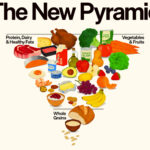
The core of this reset is a shift in focus: moving away from counting individual nutrients (like grams of fat) and toward the quality of the whole food – i.e., a focus on “food matrix.” In other words, the new guidelines prioritize foods in their most natural, minimally processed states (e.g., eggs, meat, and vegetables) over highly processed alternatives, even if those alternatives are lower in fat or calories. The running theme of the new guidelines is: “Eat Real Food” (3).
Moving Away from Fat as a Nutrient of Concern
A major part of this reset was the departure from the “uniform fat restriction” of the past. For the first time in decades, the guidelines moved away from the strict requirement that dairy must be low-fat or fat-free. By including whole-fat dairy and animal proteins as healthy staples, the 2025–2030 policy acknowledges that these foods provide essential nutrients that were often lost in the push for “low-fat” diets (3,8). Importantly, I will say this now and reinforce later. The guidelines have shifted from a monolithic stance on fat, specifically saturated fat, as a nutrient of public health concern, and have adopted a more neutral stance on this food component while remaining explicit about it being limited to >10% total calorie intake. To claim that the new administration is supporting unrestricted intake of saturated fat (a claim I have seen many people make in the past few days) is a complete misrepresentation of the new Guidelines’ language.
Justification: A Failing Food System
The administration justified this sudden change by pointing to the “failure” of the modern food system (8). With nearly 75% of Americans now overweight or obese, the 2025–2030 Scientific Foundation report argues that the previous focus on “calorie control” and “lean proteins” has clearly failed to protect the public (3, 8).
Now, lets dig into the controversy.
V. The Controversy
The 2025–2030 DGA created a firestorm in the nutrition world, not just because the advice changed, but because of how it changed. The controversy, whether you agree with the guidelines or not, is centered on a fundamental break in the standard government process (4, 5). The primary source of conflict is the massive gap between what the independent experts recommended and what the government ultimately published.
In the most recent cycle, the scientific structure changed. Although the 2025 Dietary Guidelines Committee completed its evidence reviews and submitted a Scientific Report in December 2024, the Departments of Agriculture and Health and Human Services chose not to adopt it as the primary evidentiary basis for the final Guidelines. Instead, the administration introduced a separate Scientific Foundation for the Dietary Guidelines for Americans, 2025–2030, developed through an independent evidence review process and designated as the scientific underpinning of the policy.
The administration justified this shift by arguing that the Dietary Guidelines Committee’s incorporation of a “health equity lens” imposed interpretive filters that compromised scientific objectivity. As a result, the Dietary Guidelines Committee report was reviewed selectively, with individual conclusions accepted or rejected, rather than serving as the central scientific authority.
This procedural change has been critiqued as unusual in the modern history of the Dietary Guidelines for Americans and has drawn criticism from public-health advocacy organizations, including the Center for Science in the Public Interest, which argued that the administration sidelined a two-year independent scientific review in favor of an alternative evidentiary framework (5).
Two Definitions of “Scientific Integrity”
The controversy also reveals a deep split in how people define “good science.”
Scientists vs. Secretaries
Finally, this situation has created a major tension between expert consensus and executive authority. In the past, the scientists were the primary authors of the “truth” behind the guidelines. In the 2025–2030 cycle, the executive branch (the Secretaries of the USDA and HHS) asserted their authority to overrule the committee, arguing that the committee had allowed “ideological bias” to cloud the science (3, 8). This, no surprise, has sparked a national debate.
At its core, the controversy reflects a broader disagreement over who should define scientific integrity in nutrition policy: an independent “expert” committee synthesizing the full body of evidence, or executive agencies exercising discretionary authority over how evidence is interpreted and applied by using panels independent from the independent panel. This tension underlies the more substantive scientific debates that we are now getting into.
VI. Scientific Evidence Underlying the Dispute
The disagreement behind the 2025–2030 Dietary Guidelines comes down to how nutrition science is interpreted. For decades, federal guidance has relied on the “diet–heart hypothesis”, which assumes that lowering saturated fat reduces cholesterol and therefore lowers the risk of cardiovascular disease (9). The current White House administration has argued that several randomized controlled trials show this chain of logic does not always hold – i.e., lower cholesterol does not consistently lead to longer life. The studies below form the core of that debate.
A. The Evidence for Changing the Guidelines
Saturated Fat: Nutrients vs. Whole Foods
Current guidelines generally recommend replacing saturated fat with unsaturated fat to lower LDL cholesterol. The new guidelines suggest that the health effects of saturated fat may depend more on the whole food it comes from (i.e., the food matrix) than on fat alone. For instance, the Milky Way Study was a double-blind randomized controlled trial published in 2021that involved 49 healthy children aged 4–6 years. It tested the recommendation that children switch to reduced-fat dairy. Over three months, children in the reduced-fat group lowered their dairy fat intake by an average of 12.9 g/day compared with those who continued eating whole-fat dairy (10). Despite this reduction in fat intake, there were no meaningful differences between the two groups. Measures of body fat, including body fat percentage and BMI, did not differ. Markers of cardiometabolic health also remained similar, including fasting LDL cholesterol, systolic blood pressure, and other risk factors. These results challenge the idea that whole-fat dairy automatically increases obesity or cardiometabolic risk.
Replacing Saturated Fat with Omega-6-Containing Vegetable Oil
Another long-standing recommendation has been to replace saturated fat with polyunsaturated fatty acids (PUFAs), especially omega-6 linoleic acid from vegetable oils (1, 2, 8). However, the current administration claim that data recovered from large historical randomized controlled trials raise questions about whether this approach improves survival.
The researchers of the Sydney Heart Study suggest that while linoleic acid lowers cholesterol, it may also increase vulnerability to lipid oxidation (13). In the Sydney study, the intervention group saw a larger drop in total cholesterol (−13.3%) than controls (−5.5%), yet experienced higher mortality (13). This finding suggests, and the current administration in the White House agrees, that cholesterol reduction alone is not a reliable indicator of survival benefit.
B. The Evidence for Keeping the Guidelines the Same
Why Organizations and “Experts” Still Support Saturated Fat Limits
While new federal guidelines have moved toward a more “neutral” view of animal fats, many of the United States’ more prominent health organizations, including the American Heart Association and the Center for Science in the Public Interest, have pushed back. They argue that weakening the long-standing 10% limit on saturated fat overlooks what federal law calls the “preponderance of scientific evidence” that the law mandates the guidelines abide by. Although the limit of no more than 10% of saturated fat intake with respect to total caloric intake stands, the Center for Science in the Public Interest notes that the new guidelines simultaneously emphasize the consumption of animal protein, butter, and full-fat dairy. They argue that this food-based guidance “undermines” the saturated fat limit (5).
The position of the American Heart Association and the Center for Science in the Public Interest is not based on a single study. Instead, they place the greatest weight on modern, what they consider to be “well-controlled” randomized trials and large systematic reviews, and less weight on older studies they believe have serious design problems.
The Debate Over Re-Examined Older Studies
Much of the argument for relaxing saturated fat limits comes from renewed attention to two older studies: the Sydney Diet Heart Study and the Minnesota Coronary Experiment (9, 13). These trials are often cited because they found that replacing saturated fat with vegetable oils rich in linoleic acid did not reduce overall mortality. Health organizations respond that these studies should not guide current policy because of major methodological limitations.
In the Sydney Diet Heart Study, the intervention group consumed a margarine that was later found to be high in industrial trans fats (14). At the time, the dangers of trans fats were not yet understood. Today, trans fats are recognized as more harmful to heart health than saturated fats. Because of this, critics argue the study did not truly test the effects of replacing saturated fat with polyunsaturated fat alone. Instead, it unintentionally tested a substitution involving a known harmful fat, making the results difficult to interpret.
The Minnesota Coronary Experiment is criticized for different reasons. Although originally designed to run longer, changes in institutional care meant participants were followed for an average of only 384 days. Many cardiovascular benefits of dietary change are believed to take one to two years or more to appear, leading critics to argue that the study ended too soon to detect meaningful effects (14). Like the Sydney trial, it also used partially hydrogenated oils, introducing trans fats as a potential confounding factor.
The “Core” Trials and the LDL Connection
Instead of relying on these contested historical datasets, health organizations emphasize evidence from “core” randomized controlled trials that met rigorous design criteria: adequate duration (greater than two years), good adherence, and freedom from major confounders like trans fats.
A meta-analysis of four such trials, including the Oslo Diet-Heart Study and the Veterans Administration trial, demonstrated that replacing saturated fat with polyunsaturated vegetable oil reduced coronary heart disease (CHD) events by 29% (14). This reduction is comparable to the benefits achieved through statin therapy, which reinforced the diet-heart hypothesis. Additionally, a 2020 Cochrane systematic review supports this stance, finding that across 15 randomized trials involving approximately 59,000 participants, reducing saturated fat for at least two years reduced the risk of combined cardiovascular events by 21% (15). This protection is mechanistically linked to cholesterol. The “LDL theory” suggests that saturated fat raises LDL cholesterol, a well-established causal mediator of atherosclerosis (14). Meta-regression analyses indicate that trials achieving greater reductions in serum cholesterol saw greater reductions in cardiovascular events, suggesting a dose-response relationship that validates the focus on LDL lowering (15).
Seed Oils and Inflammation – Just a Myth?
A common counter-argument to the use of vegetable oils is the concern that linoleic acid (the primary omega-6 PUFA) promotes inflammation and increases coronary heart disease risk. However, Farvid et al. note that this speculation is “not supported by randomized controlled feeding studies,” which found that dietary intake of linoleic acid did not increase inflammatory markers such as C-reactive protein or cytokines (6). Furthermore, observational data involving 310,602 individuals show an inverse association between linoleic acid intake and heart disease risk (6). When comparing the highest category of intake to the lowest, dietary linoleic acid was associated with a 15% lower risk of coronary heart disease events and a 21% lower risk of coronary heart disease deaths (6). Dose-response analyses indicated a linear relationship; a 5% increase in energy from linoleic acid replacing saturated fat was associated with a 9% lower risk of coronary heart disease events and a 13% lower risk of coronary heart disease deaths (6). These data support current recommendations to replace saturated fat with polyunsaturated fat for the primary prevention of coronary heart disease.
Policy Implications
Based on this body of evidence, the Uncompromised Dietary Guidelines for Americans, 2025–2030, a report released by the Center for Science in the Public Interest and the Center for Biological Diversity, maintains that saturated fat should account for less than 10% of daily calories starting at age two. The report explicitly advises replacing food sources of saturated fat (like butter and beef tallow) with sources of polyunsaturated and monounsaturated fat (such as nuts, seeds, and non-tropical vegetable oils). By rejecting the new administration’s push toward animal fats, these organizations argue they are defending public health against “harmful guidance” that contradicts established science (4, 5).
VII. Side-by-Side Policy Comparison: 2020–2025 vs. 2025–2030
Now that we’ve familiarized ourselves with the logic and data that both sides if the debate have used to make their case for National policy, let’s directly compare, point-by-point, the major differences between the previous Dietary Guidelines for Americans (2020-2025) and the newest version (2025-2030). The major differences in policy focus are detailed below:
1. Overarching Philosophy and Framework
2. Saturated Fat and Dairy
3. Food Processing and “Real Food”
4. Protein Targets and Sources
5. Carbohydrates and Grains
6. Vegetable Oils and Fats
7. Added Sugars
8. Scientific Methodology
VIII. Synthesis: Interpreting the Reset
The release of the new federal dietary guidelines alongside the alternative “Uncompromised” report marks a clear split in national nutrition policy. On the surface, the debate appears to be about familiar food choices (butter versus oils, animal protein versus plant protein). But when the underlying scientific reports are examined together, it becomes clear that this “reset” is not mainly about specific numbers or foods. It is about what kind of evidence should count as valid science when setting national nutrition policy.
The Nature of the Reset: Procedural and Epistemological
The shift introduced by the new administration is procedural and epistemological, not necessarily rhetorical or numeric. By explicitly rejecting the 2025 Dietary Guidelines Advisory Committee report, the administration departed from the established guideline-development process. It argued that the committee’s use of a “health equity lens” introduced interpretive bias that obscured core physiological questions (8).
In its place, the new Scientific Foundation imposes a hierarchy of evidence that prioritizes causal data from randomized controlled trials over the observational epidemiology that has historically been the linchpin of nutrition policy. This represents a deliberate move away from a public-health framework, which accepts consistent associations across large populations as sufficient for guidance, toward a medicalized model that the administration claims demands clinical proof of cause-and-effect before endorsing or restricting dietary components. Under this framework, even long-standing, internally consistent observational evidence is treated as insufficient. In doing so, the new approach explicitly rejects the traditional interpretation of the legally required “preponderance of scientific evidence” standard. A move that many “experts” are critiquing as the government taking science interpretation into its own hands.
Continuity Beneath the Rhetoric
Despite the rhetorical upheaval and the stark ideological framing that we see on social media, “Make America Healthy Again” versus “Uncompromised Science,” significant continuity remains in the final policy. Most notably, the administration’s published guidelines retain the longstanding limit on saturated fat (less than 10% of calories), even though the administration’s own scientific report argues that such limits are not supported by causal evidence (8).
At the same time, both sides converge on a shared target: ultra-processed foods. Whether framed as a return to “minimally processed, naturally nutrient-dense foods” by the administration or as a critique of “highly processed” foods by its critics, there is broad agreement that food processing, not just macronutrient composition, contributes diet-related disease (although many argue, and rightfully so, that it is the macronutrient composition andcaloric load that drive the harmful effects of processed foods). This convergence signals a broader shift away from strict nutrient reductionism toward food quality and processing, even as disagreements over specific points of emphasis persist.
Persistent Scientific Uncertainty
The divergence between the two sets of guidance reflects genuine and unresolved disputes in nutrition science that the current evidence base cannot fully settle:
Taken together, this shows that the theoretical and political framing of nutrition policy has changed dramatically. The result is a policy environment in which, some would say “radical”, scientific reinterpretations coexist with largely unchanged numeric limits, illuminating the tension between evolving scientific arguments and the inertia of established public-health guidance.
IX. Conclusion: Lessons from a Broken Pattern
The 2025–2030 Dietary Guidelines update is different from any before it. Usually, the government updates nutrition advice slowly, making small tweaks every five years. This time, there was a major break in that pattern. By releasing a new “Scientific Foundation” that rejects the expert committee’s advice, and with the opposition publishing their own “Uncompromised” guidelines, we are left with two competing rulebooks (4, 8). This conflict teaches us three big lessons about how we think about food and health.
1. The Risks of Flipping the Script vs. Slow Change
For decades, the guidelines changed gradually to keep public trust and keep food programs running smoothly. The new administration argued that gradual change was keeping bad science alive, specifically regarding saturated fats and vegetable oils. By hitting the “reset” button, they were able to bring in older data (like the Minnesota Coronary Experiment and Sydney Diet Heart Study) that challenged the idea that lowering cholesterol always saves lives. However, this sudden shift comes with a cost. When official advice flips overnight—telling people to ignore the expert committee, it understandably creates confusion. We now have a situation where doctors and schools have to choose between two different versions of “the truth”. This makes it harder for the average American to know what to believe, potentially damaging trust in science itself (a theme we have heard routinely regardless of policy belief over the years).
2. Focusing on Nutrients vs. Real Food
This debate shows the problem with “nutritionism” – i.e., the obsession with individual nutrients rather than whole foods. For years, policy focused on the math of swapping saturated fat for linoleic acid (polyunsaturated fat).
3. We Need Clear Rules for “Proof”
Finally, this cycle proves that we need to agree on what counts as scientific proof. The two sides are playing by different rules.
Until the government defines exactly what kind of evidence is required to make a rule, we will remain in this deadlock. Future guidelines need a transparent standard that balances the rigor of clinical trials with the reality that we cannot test every single food in a lab for a lifetime.
References
1. Snetselaar LG, de Jesus JM, DeSilva DM, Stoody EE. Dietary Guidelines for Americans, 2020–2025: Understanding the Scientific Process, Guidelines, and Key Recommendations. Nutr Today. 2021;56(6):287-295.
2. U.S. Department of Agriculture and U.S. Department of Health and Human Services. Dietary Guidelines for Americans, 2020-2025. 9th Edition. December 2020.
3. U.S. Department of Health and Human Services and U.S. Department of Agriculture. The Scientific Foundation for the Dietary Guidelines for Americans, 2025–2030. 2025.
4. Center for Science in the Public Interest and Center for Biological Diversity. The Uncompromised Dietary Guidelines for Americans, 2025–2030. 2025.
5. Lurie P. New Dietary Guidelines undercut science and sow confusion. Statement. Center for Science in the Public Interest. Updated January 7, 2026.
6. Farvid MS, Ding M, Pan A, et al. Dietary Linoleic Acid and Risk of Coronary Heart Disease: A Systematic Review and Meta-Analysis of Prospective Cohort Studies. Circulation. 2014;130(18):1568-1578.
7. Sacks FM, Lichtenstein AH, Wu JHY, et al. Dietary Fats and Cardiovascular Disease: A Presidential Advisory From the American Heart Association. Circulation. 2017;136:e1–e23.
8. U.S. Department of Health and Human Services and U.S. Department of Agriculture. The Scientific Foundation for the Dietary Guidelines for Americans, 2025–2030. 2025.
9. Ramsden CE, Zamora D, Majchrzak-Hong S, et al. Re-evaluation of the traditional diet-heart hypothesis: analysis of recovered data from Minnesota Coronary Experiment (1968-73). BMJ. 2016;353:i1246.
10. Nicholl A, Deering KE, Evelegh K, et al. Whole-fat dairy products do not adversely affect adiposity or cardiometabolic risk factors in children in the Milky Way Study: a double-blind randomized controlled pilot study. Am J Clin Nutr. 2021;114:2025–2042.
11. Frantz ID Jr, Dawson EA, Ashman PL, et al. Test of effect of lipid lowering by diet on cardiovascular risk. The Minnesota Coronary Survey. Arteriosclerosis. 1989;9:129–35.
12. Woodhill JM, Palmer AJ, Leelarthaepin B, McGilchrist C, Blacket RB. Low fat, low cholesterol diet in secondary prevention of coronary heart disease. Adv Exp Med Biol. 1978;109:317–30.
13. Ramsden CE, Zamora D, Leelarthaepin B, et al. Use of dietary linoleic acid for secondary prevention of coronary heart disease and death: evaluation of recovered data from the Sydney Diet Heart Study and updated meta-analysis. BMJ. 2013;346:e8707.
14. Sacks FM, Lichtenstein AH, Wu JHY, et al. Dietary Fats and Cardiovascular Disease: A Presidential Advisory From the American Heart Association. Circulation. 2017;136:e1–e23.
15. Hooper L, Martin N, Jimoh OF, Kirk C, Foster E, Abdelhamid AS. Reduction in saturated fat intake for cardiovascular disease. Cochrane Database of Systematic Reviews. 2020, Issue 5. Art. No.: CD011737.

Subscribe to receive new episodes, articles, and lectures by email.
